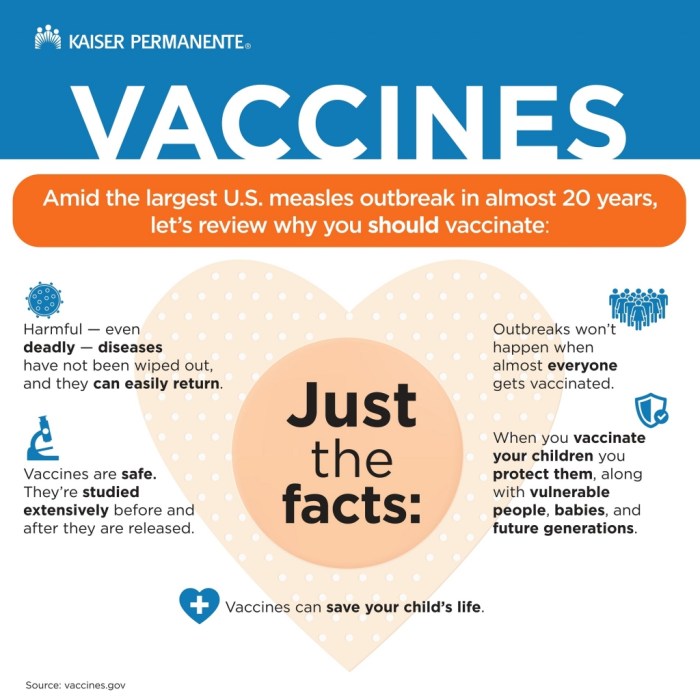
The role of vaccines in preventive care for families takes center stage as we explore the profound impact of these medical marvels on safeguarding our loved ones. From childhood immunizations to adult booster shots, vaccines act as a shield against a multitude of diseases, empowering individuals and families to live healthier, more fulfilling lives.
Vaccines have revolutionized healthcare, significantly reducing the incidence of once-devastating illnesses. By stimulating the immune system, vaccines prepare the body to fight off specific pathogens, preventing infections and their associated complications. This preventative approach extends beyond individual health, fostering a collective immunity that safeguards entire communities, particularly the most vulnerable members.
Introduction
Preventive care plays a crucial role in maintaining the health and well-being of families. It involves proactive measures taken to prevent illness and disease, promoting overall health and reducing the risk of complications. Vaccinations are an essential component of preventive care, providing a powerful shield against numerous infectious diseases.Understanding the benefits of vaccination is vital for individuals and families.
Vaccines work by stimulating the body’s immune system to develop immunity against specific diseases. When a vaccinated person encounters the disease-causing organism, their immune system recognizes and fights it off, preventing illness or minimizing its severity.
The Importance of Vaccines for Individuals and Families
Vaccines offer numerous benefits for individuals and families:
- Protection from serious diseases:Vaccines protect against potentially life-threatening diseases, such as measles, mumps, rubella, polio, and tetanus.
- Reduced risk of complications:Even if a vaccinated individual contracts a disease, the severity of the illness is significantly reduced, minimizing the risk of complications and long-term health issues.
- Prevention of outbreaks:When a high percentage of the population is vaccinated, it creates herd immunity, protecting those who cannot be vaccinated due to medical reasons.
- Cost-effectiveness:Vaccination is a cost-effective measure, preventing costly hospitalizations, treatments, and lost productivity.
- Peace of mind:Knowing that children are protected from preventable diseases provides families with peace of mind and allows them to focus on other aspects of their lives.
Vaccines and Their Impact on Family Health
Vaccines are a cornerstone of preventive healthcare, playing a crucial role in safeguarding the health and well-being of families. By bolstering the immune system, vaccines help protect individuals from serious illnesses, reducing the risk of complications and fostering a healthier environment for families.
Types of Vaccines and Their Target Diseases
Vaccines are categorized based on the diseases they prevent. Some common types include:
- Live-attenuated vaccines: These vaccines contain weakened versions of the virus or bacteria that cause the disease. Examples include the measles, mumps, and rubella (MMR) vaccine and the chickenpox vaccine.
- Inactivated vaccines: These vaccines contain killed versions of the virus or bacteria. Examples include the flu vaccine and the polio vaccine.
- Subunit vaccines: These vaccines contain only specific parts of the virus or bacteria, such as proteins or toxins. Examples include the pertussis vaccine and the hepatitis B vaccine.
- Toxoid vaccines: These vaccines contain toxins produced by bacteria, which have been deactivated. Examples include the tetanus vaccine and the diphtheria vaccine.
- Conjugate vaccines: These vaccines combine a weak antigen with a stronger antigen to enhance the immune response. Examples include the Haemophilus influenzae type b (Hib) vaccine and the pneumococcal conjugate vaccine (PCV).
How Vaccines Strengthen the Immune System
Vaccines work by mimicking a natural infection, triggering the immune system to produce antibodies that protect against the disease. When a person receives a vaccine, their body recognizes the weakened or inactive virus or bacteria as a threat and mounts an immune response.
This response involves the production of antibodies, which are specialized proteins that bind to and neutralize the virus or bacteria, preventing it from causing illness.
Role of Vaccines in Preventing Serious Illnesses and Complications
Vaccines have been instrumental in eradicating or significantly reducing the incidence of many infectious diseases that once posed a major threat to public health. For example, smallpox, a deadly disease that once claimed millions of lives, has been eradicated worldwide thanks to the development of a highly effective vaccine.
Similarly, polio, a debilitating disease that can cause paralysis, has been nearly eliminated in most parts of the world due to widespread vaccination.
Common Childhood Vaccines, Target Diseases, and Recommended Schedule
| Vaccine | Target Diseases | Recommended Schedule |
|---|---|---|
| Hepatitis B (HepB) | Hepatitis B virus infection | Birth, 1-2 months, 6-18 months |
| Rotavirus (RV) | Rotavirus gastroenteritis | 2, 4, and 6 months |
| Diphtheria, tetanus, and pertussis (DTaP) | Diphtheria, tetanus, and pertussis | 2, 4, 6, and 15-18 months, 4-6 years |
| Haemophilus influenzae type b (Hib) | Haemophilus influenzae type b infection | 2, 4, 6, and 12-15 months |
| Pneumococcal conjugate vaccine (PCV) | Pneumococcal disease | 2, 4, 6, and 12-15 months |
| Inactivated poliovirus vaccine (IPV) | Polio | 2, 4, and 6-18 months, 4-6 years |
| Measles, mumps, and rubella (MMR) | Measles, mumps, and rubella | 12-15 months, 4-6 years |
| Varicella (chickenpox) | Chickenpox | 12-15 months, 4-6 years |
| Hepatitis A (HepA) | Hepatitis A virus infection | 12-23 months, 18-48 months |
| Influenza (flu) | Influenza | Annually, starting at 6 months of age |
The Importance of Herd Immunity: The Role Of Vaccines In Preventive Care For Families
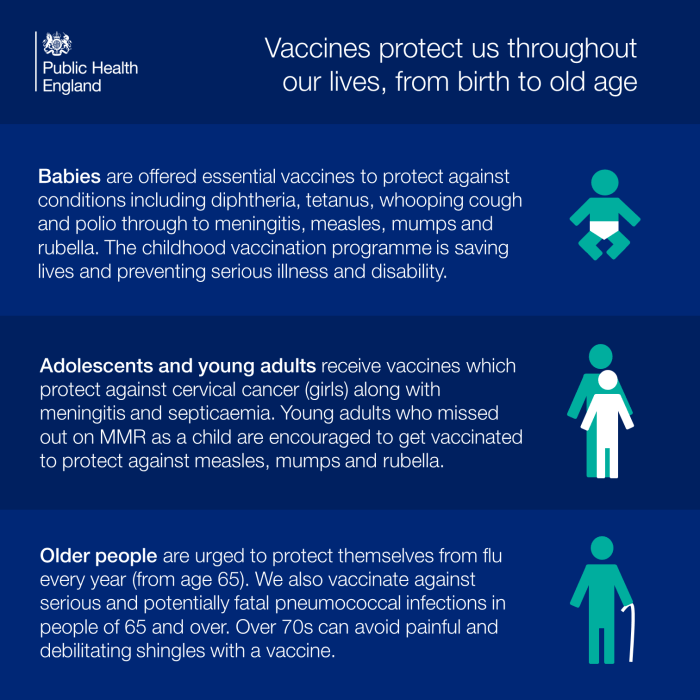
Herd immunity, also known as community immunity, is a crucial concept in public health. It describes a situation where a significant portion of a population is immune to a contagious disease, protecting those who are not immune. This protection arises because the disease has difficulty spreading when most individuals are immune.
How Vaccination Contributes to Herd Immunity
Vaccination plays a pivotal role in establishing herd immunity. When a large percentage of the population is vaccinated, the likelihood of a susceptible individual encountering an infected person decreases. This reduces the transmission of the disease, effectively shielding vulnerable individuals who cannot be vaccinated due to medical reasons or age.
The effectiveness of herd immunity depends on the contagiousness of the disease and the vaccination rate within the population.
Examples of Diseases Controlled by Vaccination
Numerous diseases have been effectively controlled through widespread vaccination, significantly improving global health.
- Measles:This highly contagious viral disease was once a major public health concern, causing significant morbidity and mortality. However, widespread vaccination programs have drastically reduced measles cases globally, demonstrating the power of herd immunity in controlling infectious diseases.
- Polio:Polio is a debilitating viral disease that can lead to paralysis. Through global vaccination efforts, polio cases have declined by over 99% since 1988, with the goal of eradicating the disease completely. This success highlights the transformative impact of vaccination on public health.
- Rubella:Rubella, also known as German measles, can cause serious complications in pregnant women, including miscarriage and birth defects. Vaccination has been instrumental in reducing rubella cases and preventing congenital rubella syndrome, a devastating condition affecting newborns.
Addressing Vaccine Hesitancy
Vaccine hesitancy, the reluctance or refusal to vaccinate despite the availability of vaccines, is a complex issue with significant implications for public health. It’s essential to understand the factors driving vaccine hesitancy and develop effective strategies to address it.
Common Misconceptions and Concerns, The role of vaccines in preventive care for families
Misinformation and lack of trust in healthcare systems are often at the root of vaccine hesitancy. Addressing these concerns requires a multi-faceted approach.
- Vaccines Cause Autism:This misconception originated from a fraudulent study published in 1998, which has since been retracted. Numerous large-scale studies have confirmed that vaccines do not cause autism. The Centers for Disease Control and Prevention (CDC) and the World Health Organization (WHO) have repeatedly stated that vaccines are safe and effective.
- Vaccines Contain Harmful Ingredients:Some people worry about the presence of preservatives, such as thimerosal, or other ingredients in vaccines. However, the levels of these substances are carefully regulated and deemed safe by health authorities. Thimerosal, for example, is used in some vaccines to prevent bacterial contamination, but it has been phased out of many vaccines for infants and children.
- Natural Immunity is Better:While natural immunity can provide protection against certain diseases, it often comes at a higher cost, potentially leading to severe illness, complications, or even death. Vaccines offer a safer and more controlled way to develop immunity, minimizing the risks associated with natural infection.
- Vaccines are Not Necessary:This belief often stems from a lack of understanding of the devastating impact of vaccine-preventable diseases. Many diseases that were once common and deadly, such as polio, measles, and rubella, are now rare due to widespread vaccination.
Providing Evidence-Based Information
Combating vaccine hesitancy requires providing accurate and reliable information. This can be achieved through:
- Sharing Credible Resources:Encourage individuals to consult reputable sources, such as the CDC, WHO, and trusted medical organizations. These organizations provide evidence-based information on vaccine safety and efficacy.
- Presenting Scientific Data:Provide clear and concise explanations of the scientific evidence supporting the safety and effectiveness of vaccines. This includes studies demonstrating the benefits of vaccination and the risks of not being vaccinated.
- Addressing Specific Concerns:Acknowledge and address specific concerns raised by individuals. For example, if someone is worried about the presence of thimerosal, provide information about its safety and the regulatory measures in place to ensure its use is appropriate.
Promoting Vaccine Confidence
Building trust in vaccines is crucial to overcoming hesitancy. This can be achieved by:
- Engaging with Community Leaders:Collaborate with trusted community leaders, such as religious figures, teachers, and community health workers, to promote vaccine confidence. These leaders can play a vital role in disseminating accurate information and addressing concerns within their communities.
- Sharing Personal Stories:Encourage individuals who have benefited from vaccination to share their stories. Personal anecdotes can be powerful in demonstrating the value of vaccines.
- Providing Transparent Information:Ensure that information about vaccines is clear, accessible, and transparent. This includes providing information about the risks and benefits of vaccination, as well as the ingredients used in vaccines.
Vaccines and Chronic Diseases
Vaccines are not just about preventing acute infectious diseases; they play a crucial role in preventing chronic illnesses that can significantly impact families and healthcare systems. By strengthening the immune system, vaccines help protect individuals from developing long-term health complications.
The Link Between Vaccination and Reduced Risk of Certain Cancers
Vaccination can contribute to a reduced risk of certain cancers. This is because some vaccines target viruses known to be linked to specific types of cancer. For example, the human papillomavirus (HPV) vaccine protects against HPV infections, which are a major cause of cervical cancer.
- Hepatitis B Vaccine:This vaccine protects against chronic hepatitis B infection, a major risk factor for liver cancer.
- HPV Vaccine:The HPV vaccine is highly effective in preventing cervical cancer and other cancers caused by HPV, including cancers of the vulva, vagina, anus, penis, and head and neck.
The Role of Vaccines in Holistic Wellness
Vaccines are not just about preventing specific diseases; they play a vital role in promoting overall well-being and enhancing quality of life for individuals and families. The benefits extend beyond physical health, encompassing mental and emotional well-being, contributing to a more holistic approach to health.
The Connection Between Vaccination and Mental Health
The absence of preventable diseases brought about by vaccines contributes significantly to mental well-being. Vaccinations help alleviate the anxieties and stresses associated with potential illnesses, allowing individuals to focus on personal growth and development.
- Parents who are confident in their children’s immunization status can experience reduced stress and anxiety, leading to a more positive and nurturing environment for their families.
- The peace of mind that comes with knowing that children are protected from potentially life-threatening diseases allows them to thrive and engage in activities without fear of illness.
- Communities with high vaccination rates enjoy a sense of collective security, reducing the fear of outbreaks and promoting a more positive social environment.
Integrating Vaccines into Family Health Practices
Vaccines are an essential part of preventive healthcare for families. By incorporating vaccines into family routines, parents can help ensure their children receive the necessary protection against preventable diseases. This section explores practical tips for incorporating vaccines into family routines, emphasizes the importance of maintaining a regular vaccination schedule, and highlights the role of healthcare providers in guiding families through vaccination decisions.
Maintaining a Regular Vaccination Schedule
A regular vaccination schedule is crucial for providing ongoing protection against infectious diseases. By following the recommended vaccination schedule, families can ensure that their children receive the necessary doses of vaccines at the appropriate ages.
- Consult with a healthcare providerto determine the appropriate vaccination schedule for each child, considering their age, health history, and any specific needs.
- Keep track of vaccination datesand reminders to ensure timely administration of vaccines.
- Store vaccines properlyaccording to manufacturer instructions.
The Role of Healthcare Providers
Healthcare providers play a vital role in guiding families through vaccination decisions. They can provide accurate and up-to-date information about vaccines, address concerns, and answer questions.
- Discuss vaccine safety and efficacywith healthcare providers to gain a comprehensive understanding of the benefits and risks associated with each vaccine.
- Ask questions about vaccine administration, including potential side effects and how to manage them.
- Seek guidance on managing vaccine hesitancyand address any concerns or misinformation.
The Future of Vaccines in Preventive Care
The future of vaccines in preventive care holds immense promise, with ongoing advancements in vaccine technology and a growing understanding of the complex interplay between vaccines and human health. As research continues to unravel the mysteries of infectious diseases and immunity, vaccines are poised to play an even more critical role in safeguarding the well-being of families and communities worldwide.
Advancements in Vaccine Technology and Development
The field of vaccine development is witnessing a rapid evolution, driven by innovative technologies and a renewed focus on addressing global health challenges. This progress is leading to the development of more effective, safe, and accessible vaccines.
- mRNA Vaccines:mRNA vaccines, like those used for COVID-19, utilize messenger RNA to instruct the body to produce specific proteins that trigger an immune response. This technology offers several advantages, including faster development times and the potential to adapt to emerging variants.
- Nanoparticle Vaccines:Nanoparticle vaccines encapsulate antigens within tiny particles, enhancing their delivery and immune response. This technology holds promise for developing vaccines against complex diseases, such as malaria and HIV.
- Virus-like Particle (VLP) Vaccines:VLP vaccines use harmless particles that mimic the structure of viruses, eliciting an immune response without the risk of infection. This technology has been successful in developing vaccines against HPV and hepatitis B.
Potential Future Vaccines for Emerging Diseases
The emergence of new and re-emerging infectious diseases, such as Ebola, Zika, and COVID-19, underscores the urgent need for vaccines to protect against these threats. Scientists are actively working on developing vaccines for these diseases, with promising results.
- Universal Flu Vaccine:Researchers are developing a universal flu vaccine that would provide protection against a wide range of influenza strains, reducing the need for annual vaccinations.
- HIV Vaccine:Despite decades of research, a safe and effective HIV vaccine remains elusive. However, recent advancements in vaccine technology, including the use of broadly neutralizing antibodies, have offered renewed hope.
- Anti-Cancer Vaccines:Vaccines are being explored as a potential treatment for cancer, targeting specific tumor antigens to stimulate the immune system to attack cancer cells.
The Evolving Role of Vaccines in Public Health
Vaccines are not only essential for preventing individual illness but also for protecting entire communities through herd immunity. As we learn more about the complex interplay between vaccines and human health, the role of vaccines in public health is evolving, with a growing emphasis on:
- Personalized Vaccines:With advances in genomics and immunology, personalized vaccines tailored to an individual’s genetic makeup and immune profile are becoming a reality. This approach could improve vaccine efficacy and minimize adverse effects.
- Vaccines for Non-Infectious Diseases:Research is exploring the potential of vaccines to prevent or treat non-infectious diseases, such as allergies, autoimmune disorders, and even neurodegenerative diseases.
- Vaccine Delivery Systems:Innovations in vaccine delivery systems, such as microneedle patches and nasal sprays, are making vaccination more convenient and accessible.
Last Word
As we navigate the evolving landscape of healthcare, the importance of vaccines in preventive care for families remains steadfast. By embracing vaccination, we empower ourselves and our loved ones with the strength to overcome disease, promoting a healthier future for generations to come.
Through education, access, and continued scientific advancements, we can ensure that vaccines remain a cornerstone of preventive care, safeguarding families and fostering a healthier world.
Questions Often Asked
What are the risks associated with vaccines?
While rare, some individuals may experience mild side effects such as soreness at the injection site, fever, or fatigue. However, the benefits of vaccination far outweigh the risks, as vaccines protect against serious diseases and complications.
Are vaccines safe for pregnant women?
Many vaccines are safe for pregnant women and can protect both the mother and the developing fetus from potentially harmful diseases. Consult with your healthcare provider to determine the appropriate vaccines for your individual needs during pregnancy.
Can vaccines cause autism?
Numerous studies have debunked the myth that vaccines cause autism. The scientific consensus is that vaccines are safe and effective, and there is no link between vaccination and autism.