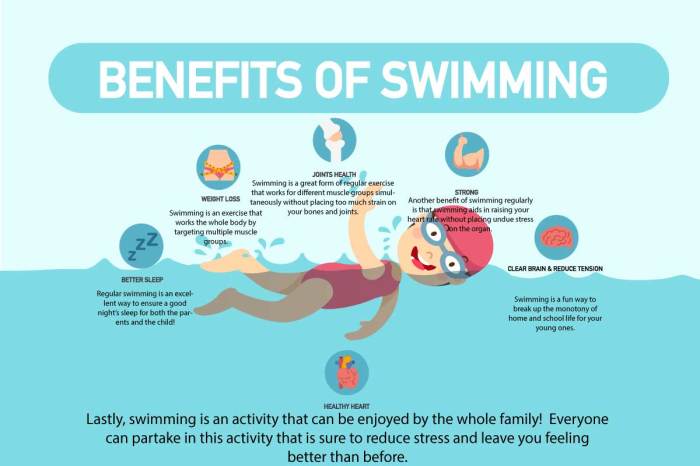
Physical Fitness Benefits of Swimming
Benefits of swimming for physical fitness – Swimming is a fantastic way to improve overall physical fitness, offering a wide range of benefits that positively impact various aspects of our health.
Improved Cardiovascular Health
- Swimming is an excellent cardiovascular workout that gets the heart pumping and improves circulation.
- It helps lower blood pressure and reduce the risk of heart disease and stroke.
- Regular swimming sessions can increase the heart’s efficiency and strengthen it over time.
Muscle Strength and Endurance
- Swimming engages multiple muscle groups, providing a full-body workout that helps build strength and endurance.
- It tones muscles and increases muscle mass, promoting a lean and fit physique.
- Swimming is low-impact, making it ideal for individuals with joint issues or those recovering from injuries.
Flexibility and Joint Health
- Swimming involves a wide range of motions that enhance flexibility and range of motion in joints.
- The buoyancy of water reduces pressure on joints, making swimming an excellent exercise for those with arthritis or joint pain.
- It can help improve posture and reduce the risk of injuries related to tight muscles and limited mobility.
Weight Management and Overall Fitness
- Swimming burns a significant amount of calories, making it an effective way to manage weight and promote fat loss.
- It boosts metabolism and can help maintain a healthy body composition when combined with a balanced diet.
- Swimming regularly can improve overall fitness levels, increase stamina, and promote a sense of well-being.
Mental Wellness Benefits of Swimming: Benefits Of Swimming For Physical Fitness
Swimming not only improves physical fitness but also provides numerous mental wellness benefits.
Stress and Anxiety Reduction
Swimming is known to be a great stress reliever as the rhythmic nature of the strokes and the sound of water can have a calming effect on the mind. The physical activity involved in swimming also helps release endorphins, which are known as ‘feel-good’ hormones that can reduce anxiety levels.
Mental Clarity and Relaxation
The repetitive nature of swimming laps can help clear the mind and provide mental clarity. The focus required to coordinate breathing and movement can also act as a form of meditation, promoting relaxation and reducing mental fatigue.
Improved Mood
Regular swimming has been linked to improved mood and a decrease in symptoms of depression. The combination of physical activity, fresh air, and the sensory experience of being in water can contribute to a more positive outlook on life.
Meditative Aspects
Swimming can be a meditative practice for many individuals, allowing them to disconnect from the outside world and be fully present in the moment. The repetitive motion of swimming back and forth can create a sense of mindfulness and inner peace, promoting overall mental well-being.
Healthy Eating and Swimming
Proper nutrition plays a crucial role in enhancing the performance of swimmers. A balanced diet not only provides the necessary energy but also supports muscle recovery and overall health, allowing swimmers to excel in their training and competitions.
Importance of Nutrition for Swimmers
Swimmers require a well-rounded diet to meet the high energy demands of their rigorous workouts. A diet rich in carbohydrates, proteins, healthy fats, vitamins, and minerals is essential to maintain optimal performance in the water.
Key Nutrients for Swimmers
- Carbohydrates: Serve as the primary fuel source for swimmers, providing energy for long training sessions and races.
- Proteins: Aid in muscle repair and growth, crucial for swimmers to recover after intense workouts.
- Healthy Fats: Support overall health, brain function, and provide a source of sustained energy for endurance swimming.
- Vitamins and Minerals: Play a vital role in various bodily functions, including muscle function, immune support, and energy production.
Pre and Post-Swimming Meal Ideas
Before hitting the pool, swimmers can benefit from consuming a meal rich in carbohydrates for sustained energy. Some pre-swimming meal ideas include oatmeal with fruits, whole grain toast with nut butter, or a smoothie with yogurt and berries.
After a swim session, it’s important to refuel the body with a combination of carbohydrates and proteins to support muscle recovery. Post-swimming meal ideas may include grilled chicken with quinoa and vegetables, a tuna salad sandwich on whole grain bread, or a protein shake with banana and almond milk.
Preventive Care through Swimming
Regular swimming not only helps in improving physical fitness but also plays a crucial role in preventive care. Swimming has been shown to have a positive impact on preventing chronic diseases and promoting overall health and well-being.
Preventing Chronic Diseases
- Swimming can help in reducing the risk of chronic conditions such as diabetes and heart diseases. The cardiovascular benefits of swimming, combined with weight management and improved circulation, contribute to better overall health and lower the chances of developing these diseases.
Reducing Risk of Osteoporosis and Arthritis, Benefits of swimming for physical fitness
- Swimming is a low-impact exercise that can help in strengthening bones and muscles. This can reduce the risk of osteoporosis and arthritis, as the buoyancy of water supports the body and reduces stress on joints, making it an ideal form of exercise for those with these conditions.
Contributing to Overall Preventive Healthcare
- By engaging in swimming regularly, individuals can improve their immune system, reduce inflammation, and boost their overall health. This contributes to preventive healthcare by strengthening the body’s defenses against various illnesses and diseases.
Long-Term Benefits of Swimming for Preventive Care
- Swimming is a lifelong activity that can be enjoyed at any age. The consistent practice of swimming can lead to long-term benefits such as improved cardiovascular health, increased muscle strength, and enhanced mental well-being. These cumulative effects help in maintaining overall health and preventing the onset of various health issues as individuals age.
Balanced Diet and Swimming
Maintaining a balanced diet is crucial for swimmers to support their physical fitness and optimize their performance in the water. A well-rounded nutritional plan can provide the energy and nutrients necessary for endurance, strength, and overall health.
Importance of a Balanced Diet
A balanced diet rich in carbohydrates, proteins, fats, vitamins, and minerals is essential for swimmers. Carbohydrates serve as the primary fuel source for energy during workouts, while proteins support muscle repair and growth. Healthy fats aid in nutrient absorption and provide long-lasting energy. Vitamins and minerals play a key role in various bodily functions, including muscle contractions and recovery.
- Example meals:
- Breakfast: Whole grain toast with avocado and eggs, a side of fruit
- Lunch: Grilled chicken salad with quinoa, mixed vegetables, and a vinaigrette dressing
- Dinner: Baked salmon with sweet potato and steamed broccoli
Supporting Nutritional Needs
Different food groups contribute to swimmers’ nutritional needs in unique ways. Carbohydrates provide quick energy, proteins aid in muscle repair and growth, healthy fats support overall health, and vitamins/minerals ensure proper bodily functions. By incorporating a variety of foods from each group, swimmers can maintain a well-rounded diet that fuels their training and recovery.
Enhancing Swimming Performance
Consuming meals rich in carbohydrates before a swim can boost energy levels, while protein-rich snacks post-workout aid in muscle recovery. Hydration is also key, as staying well-hydrated supports performance and prevents fatigue. By fueling the body with the right nutrients at the right times, swimmers can enhance their performance in the water.
Correlation with Swimming Efficiency
A balanced diet directly impacts swimming efficiency by providing the necessary fuel and nutrients for optimal performance. Swimmers who prioritize nutrition often experience improved endurance, faster recovery times, and overall better results in their training. By paying attention to what they eat and ensuring a balanced intake, swimmers can maximize their efficiency in the water.
Regular Exercise and Swimming
Swimming is not just a recreational activity; it is also an excellent form of exercise that can be incorporated into a regular fitness routine.
Full-Body Workout with Swimming
Swimming engages multiple muscle groups simultaneously, making it a fantastic full-body workout. It helps strengthen muscles in the arms, legs, core, and back, while also improving cardiovascular endurance. This holistic approach to exercise ensures that no muscle group is left untouched, leading to improved overall fitness levels.
Cross-Training Benefits of Swimming
Incorporating swimming into a cross-training routine can have numerous benefits for overall health. By alternating between swimming and other forms of exercise such as running or weight training, individuals can reduce the risk of overuse injuries and prevent workout plateaus. The varied nature of swimming also challenges the body in different ways, promoting muscle balance and flexibility.
Contribution to a Well-Rounded Fitness Regimen
Swimming offers a low-impact yet highly effective form of exercise that complements other fitness activities. Whether used as a primary workout or as a supplement to existing routines, swimming can help individuals achieve a well-rounded fitness regimen. Its ability to improve strength, endurance, and flexibility makes it a valuable addition to any exercise plan.
Mental Health Benefits of Swimming
Swimming not only benefits physical health but also plays a significant role in boosting mental well-being. The following points highlight the positive impact of swimming on mental health:
Boost Self-Esteem and Confidence
Swimming can help individuals improve their self-esteem and confidence levels. As swimmers set goals and achieve them, they gain a sense of accomplishment and self-worth, which can translate into increased confidence in other areas of life.
Psychological Benefits of Setting and Achieving Swimming Goals
Setting and achieving swimming goals can have a positive impact on mental health. It helps individuals stay focused, motivated, and disciplined, leading to a sense of purpose and fulfillment. This can contribute to improved mental well-being and overall happiness.
Impact of Swimming on Mental Resilience and Coping Mechanisms
Swimming can enhance mental resilience by providing a coping mechanism for dealing with stress, anxiety, and other mental health challenges. The repetitive nature of swimming, combined with the focus required, can help individuals clear their minds and build resilience against negative emotions.
Emotional Well-Being Promoted by Regular Swimming
Regular swimming has been linked to improved emotional well-being. The release of endorphins during exercise can boost mood and reduce feelings of anxiety and depression. Swimming in a peaceful environment, such as a quiet pool or natural body of water, can also have a calming effect on the mind.
Holistic Wellness with Swimming
Swimming is not just a physical exercise; it is a holistic approach to well-being that encompasses the mind, body, and emotions. By engaging in regular swimming sessions, individuals can experience a myriad of benefits that contribute to overall wellness.
Interconnectedness of Physical, Mental, and Emotional Health
- Swimming helps improve cardiovascular health, muscle strength, and flexibility, leading to a physically fit body.
- It also releases endorphins, the “feel-good” hormones, which can reduce stress, anxiety, and depression, promoting mental well-being.
- The rhythmic breathing and focus required during swimming can help calm the mind and improve emotional stability.
Overall Wellness Benefits of Swimming
- Swimming enhances overall endurance, promoting a healthy lifestyle and increasing longevity.
- It can aid in weight management by burning calories effectively while being gentle on the joints.
- Improvement in sleep quality and relaxation are additional benefits that contribute to holistic wellness.
Fostering a Balanced and Healthy Lifestyle
- Swimming can be a meditative practice that fosters mindfulness and self-awareness, promoting emotional balance.
- Incorporating swimming into a regular exercise routine can lead to a more balanced lifestyle, combining physical activity with mental and emotional well-being.
- By making swimming a part of daily or weekly routines, individuals can achieve a holistic approach to wellness that encompasses all aspects of health.
Swimming for Preventing Chronic Diseases
Swimming is not only a great form of exercise but also plays a significant role in preventing chronic diseases. It offers a low-impact workout that can benefit individuals dealing with conditions like asthma and arthritis. The buoyancy of water reduces stress on joints and muscles, making it easier for those with chronic illnesses to exercise without causing further strain.
Managing Conditions like Asthma and Arthritis
Swimming can be particularly beneficial for individuals with asthma and arthritis. The humid environment of indoor pools can help improve breathing for asthma patients, while the gentle movements in water can reduce inflammation and pain for those with arthritis. The controlled breathing techniques in swimming can also enhance lung capacity and overall respiratory function, which is beneficial for asthma management.
Benefits for Individuals with Chronic Illnesses
For individuals with chronic illnesses, swimming offers a holistic approach to improving overall health. It can help in maintaining a healthy weight, improving cardiovascular health, and enhancing muscle strength. The repetitive nature of swimming strokes can also aid in improving flexibility and range of motion, which is crucial for individuals with conditions like arthritis.
Supporting Recovery and Rehabilitation
Swimming is often recommended as part of recovery and rehabilitation programs for various chronic diseases. The buoyancy of water provides a supportive environment for individuals recovering from injuries or surgeries. It allows for gentle movement and muscle strengthening without putting excessive strain on the body. Swimming can also help in regaining mobility and coordination, which is essential for rehabilitation after certain illnesses.
Positive Impact on Chronic Disease Management
Numerous studies have highlighted the positive impact of swimming on chronic disease management. From reducing symptoms and pain to improving overall quality of life, swimming has been shown to be an effective form of exercise for individuals with various health conditions. Success stories of individuals incorporating swimming into their wellness routines and experiencing significant improvements in their health outcomes are a testament to the benefits of this aquatic activity.
Immunity Boosters from Swimming
Swimming is not only a great form of exercise but also plays a significant role in boosting immunity. Regular swimming can strengthen the immune system, reducing the risk of infections and illnesses. The overall health benefits of swimming contribute to improved immunity by enhancing various bodily functions.
Relationship between Swimming and a Strengthened Immune System
Swimming helps improve circulation, which allows immune cells to move through the body more efficiently. This increased circulation can aid in the early detection and elimination of pathogens, reducing the chances of falling ill.
Reducing Risk of Infections and Illnesses
- Swimming can help improve respiratory function, making the body more resistant to respiratory infections.
- The combination of aerobic exercise and water resistance strengthens muscles and improves overall physical health, reducing the susceptibility to illnesses.
- Regular swimming can also help regulate blood pressure and lower inflammation levels, which are important factors in maintaining a healthy immune system.
Overall Health Benefits Contributing to Improved Immunity
- Swimming promotes cardiovascular health, which is essential for overall well-being and immune function.
- The stress-relieving properties of swimming can reduce the production of stress hormones that can weaken the immune system.
- Increased lung capacity and oxygen intake from swimming can enhance the body’s ability to fight off infections and diseases.
Connection between Swimming, Stress Reduction, and Immune Function
Swimming is known to be a mood-boosting activity that can reduce stress and anxiety levels. Lower stress levels can contribute to better immune function, as chronic stress has been linked to a weakened immune response. By engaging in regular swimming sessions, individuals can improve their mental well-being and enhance their immunity simultaneously.
Essential FAQs
Can swimming help in managing chronic diseases?
Yes, swimming can aid in managing conditions like asthma and arthritis due to its low-impact nature and benefits for muscle strength and endurance.
Is swimming alone enough for weight management?
While swimming is great for overall fitness, combining it with a balanced diet and other forms of exercise can enhance weight management results.
How does swimming contribute to mental wellness?
Swimming reduces stress and anxiety, promotes mental clarity, and can boost self-esteem and confidence, leading to improved overall mental health.
Can swimming prevent chronic diseases?
Swimming can help prevent conditions like diabetes and heart diseases by improving cardiovascular health and overall fitness levels.
What are some key nutrients needed for swimmers?
Swimmers require nutrients like protein for muscle repair, carbohydrates for energy, and hydration to support their activity levels.